From Cutlass and Hoe to Sensors and Data: Kwadaso Agricultural College Readies Its Digital Agriculture Pilot
Tutors trained under the WFP–KOICA programme are preparing to bring smart farming, IoT and digital marketing into the classroom, starting with a hands-on student pilot this academic year.
Ask a new student at Kwadaso Agricultural College (KAC) what an agricultural admission letter should list, and the answer used to be simple: a cutlass and a hoe. The college's Principal put that very question to students recently, then asked a second one. Are those tools enough for the farming of this era?
KAC is now setting out to answer that question in its classrooms. The college is one of five agricultural colleges selected to pilot Strengthening Digital Agricultural Skills in Agricultural Colleges, a programme led by the World Food Programme (WFP) and funded by the Government of the Republic of Korea through the Korea International Cooperation Agency (KOICA). It is delivered with the Ministry of Food and Agriculture (MoFA), the Commission for Technical and Vocational Education and Training (CTVET) and the Ghana-India Kofi Annan Centre of Excellence in ICT (GI-KACE). Kwadaso joins Ohawu, Ejura and Wenchi among the pilot institutions.
Tutors first
The programme began in mid-October with a five-day Training of Trainers for tutors from the pilot colleges. Five KAC tutors took part and will lead the programme's delivery to students. A further session on drone technology is still to come.
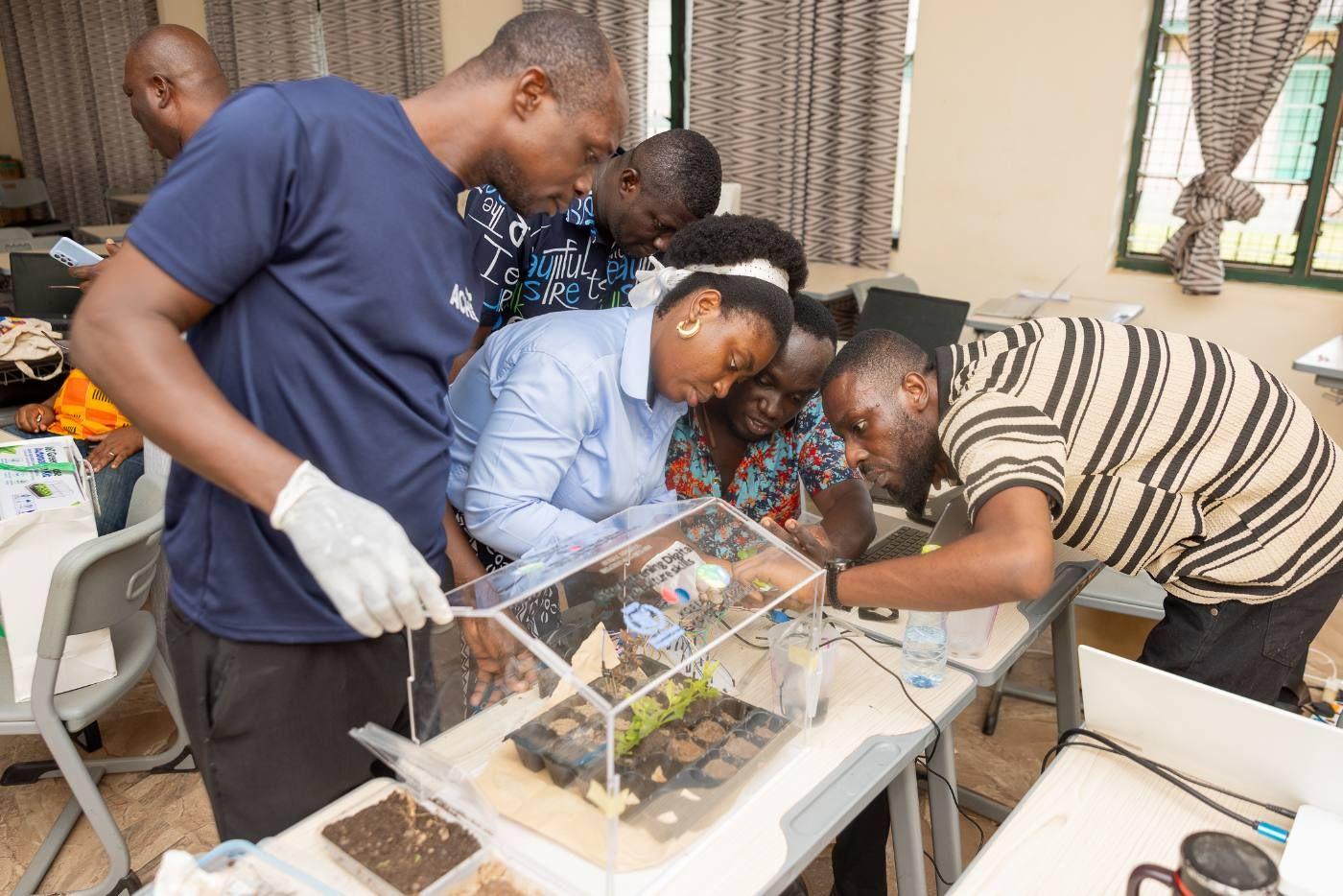
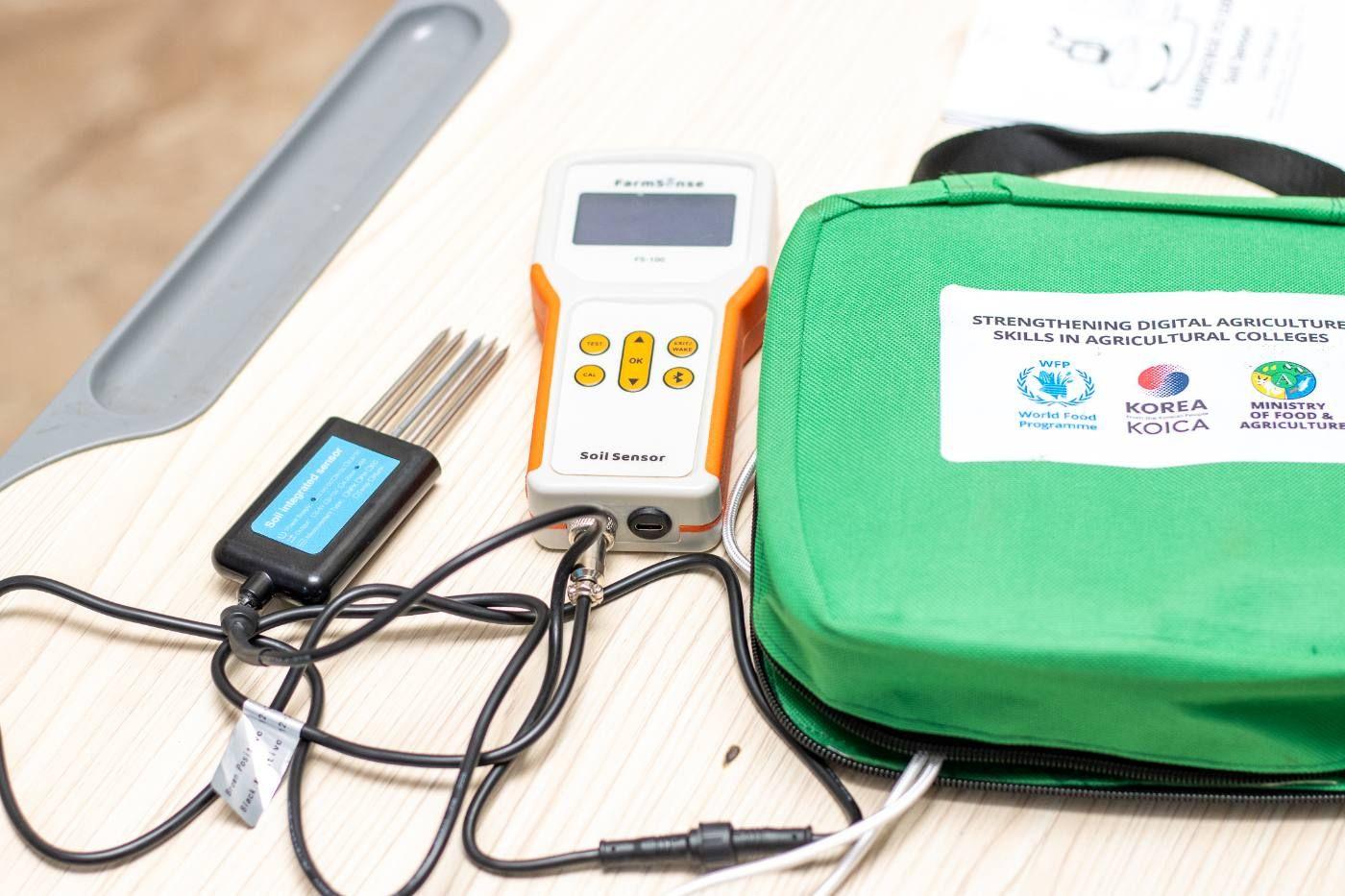
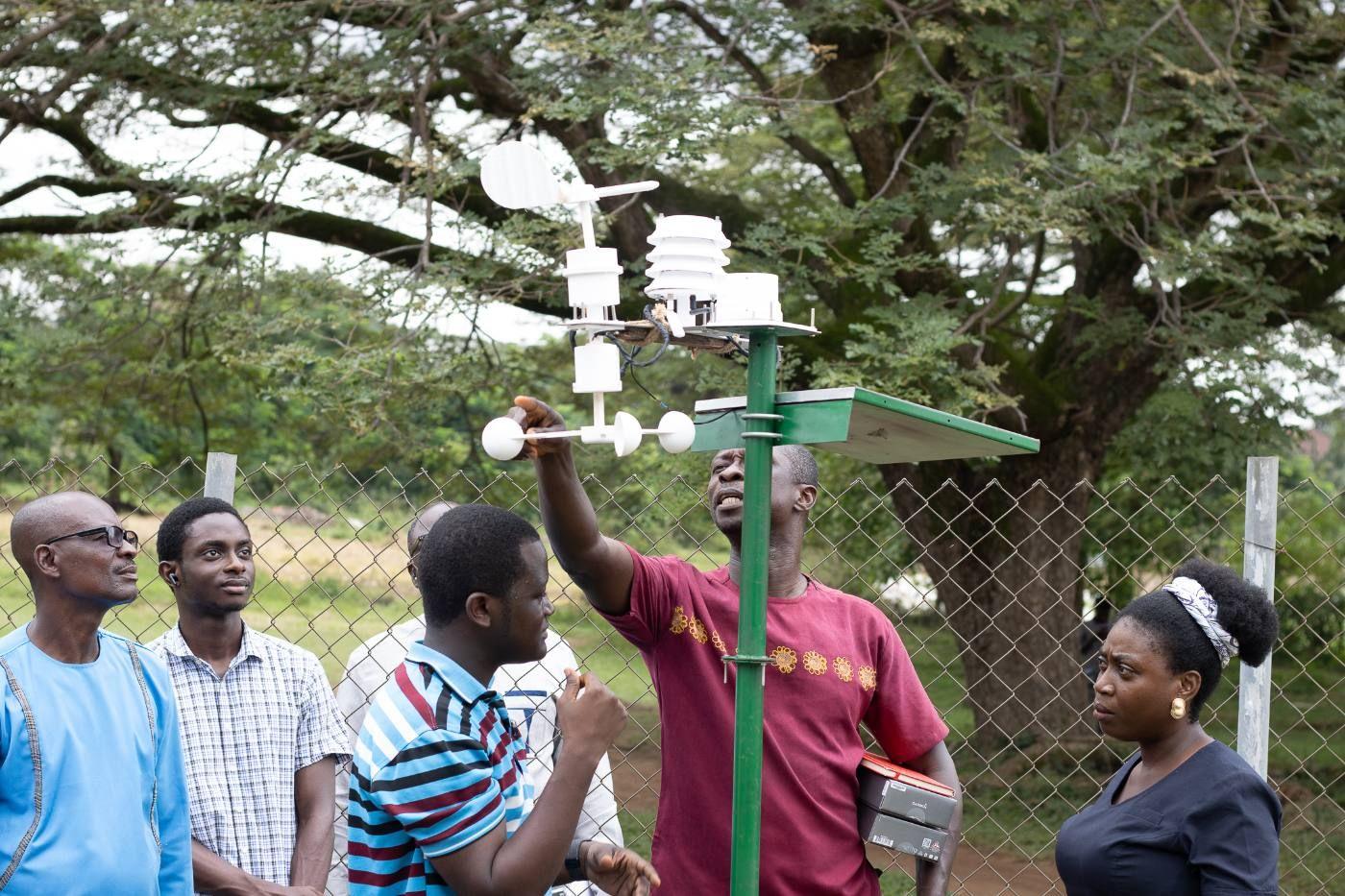
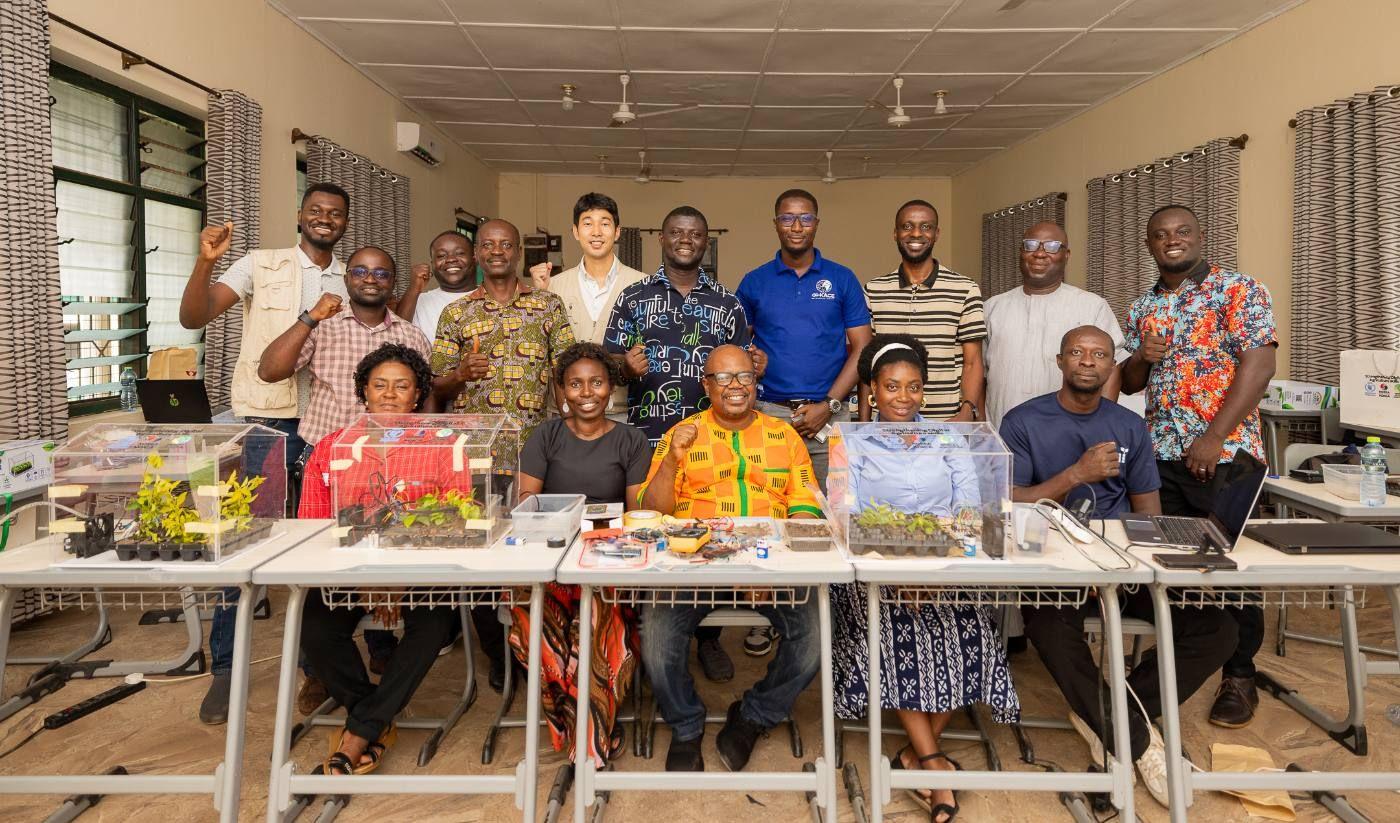
The training was hands-on from the start. Tutors set up a weather station on the college grounds, tested soil sensors and wired Arduino circuits. On the final day, teams built small sensor-equipped greenhouse models that brought the week's skills together.
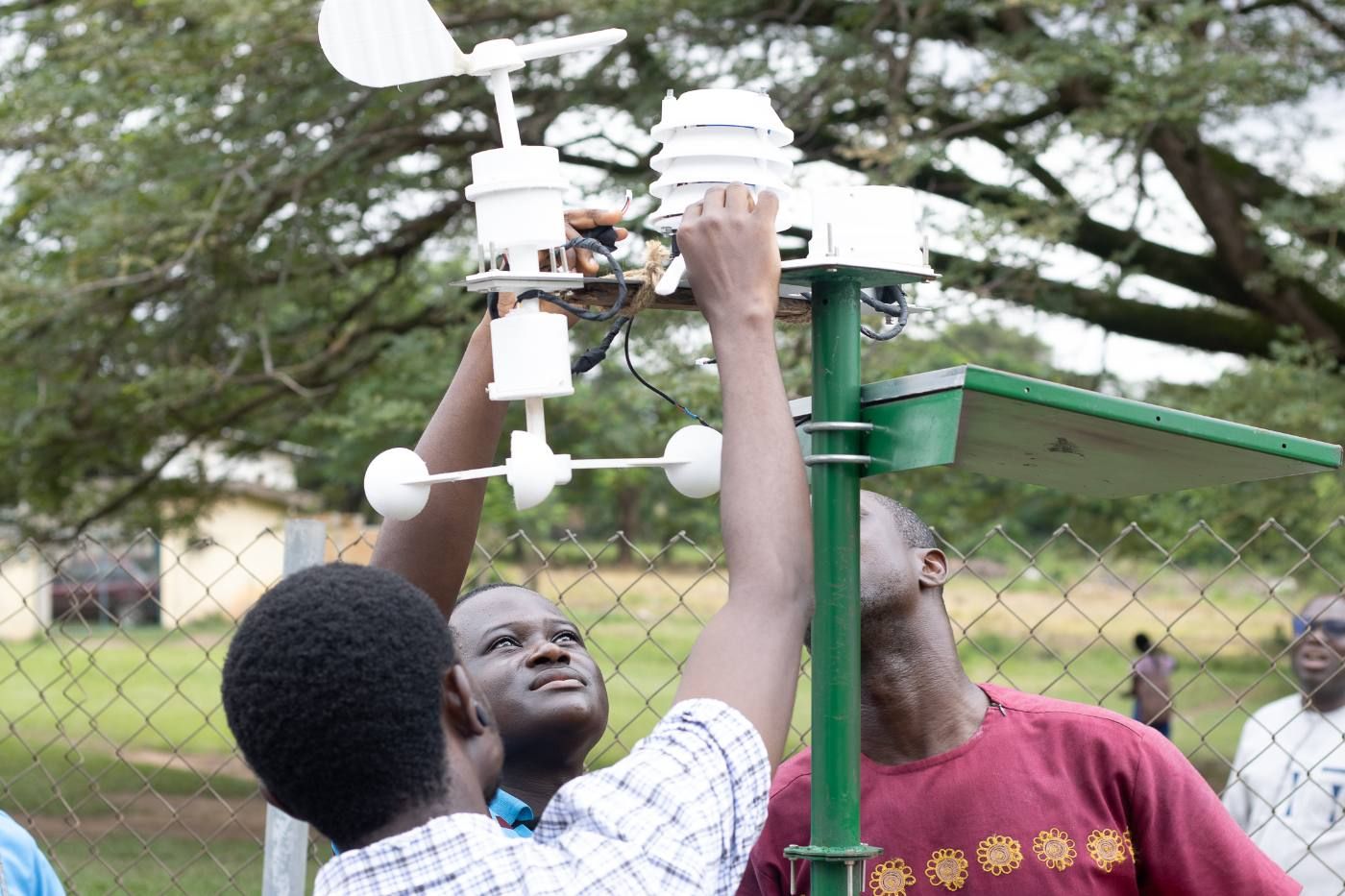 Tutors mount the sensors of the new weather station on the KAC grounds.
With KOICA support, WFP has also handed equipment to the pilot colleges, including weather stations, Arduino kits, soil testers, moisture meters and GPS units.
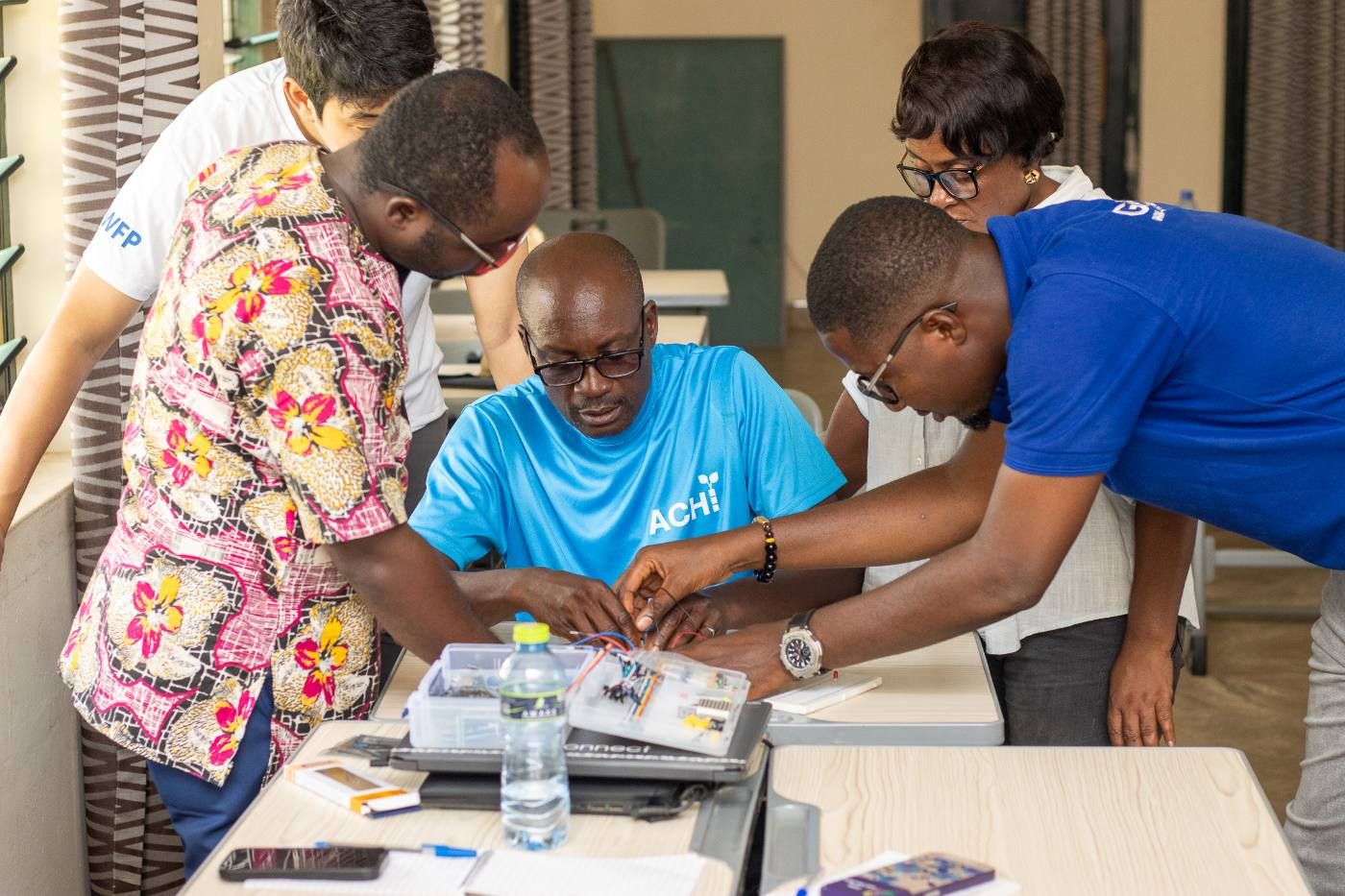 A facilitator guides tutors through an Arduino and sensor exercise.
What students will learn
The course runs for about 100 hours across five units: smart farming, digital literacy and communication, data-driven agriculture, the Internet of Things, and agribusiness and e-commerce. It takes learners from how technology supports farming, through collecting and using field data, to selling produce online.
KAC will begin with a standalone pilot this academic year, keeping practical classes small so every student gets time with the equipment. Students who complete all five units and pass assessment will receive a Certificate of Competence. WFP, GI-KACE and CTVET will monitor the pilot.
Built to last
KAC plans to train selected students from Levels 100, 200 and 300 as peer trainers. With coaching from the master trainers, they will help share the skills more widely across the college.
The Principal backed the initiative and said the college wants it to become standard practice, not a one-off project. KAC hopes to see a digital agriculture module in its next curriculum revision.
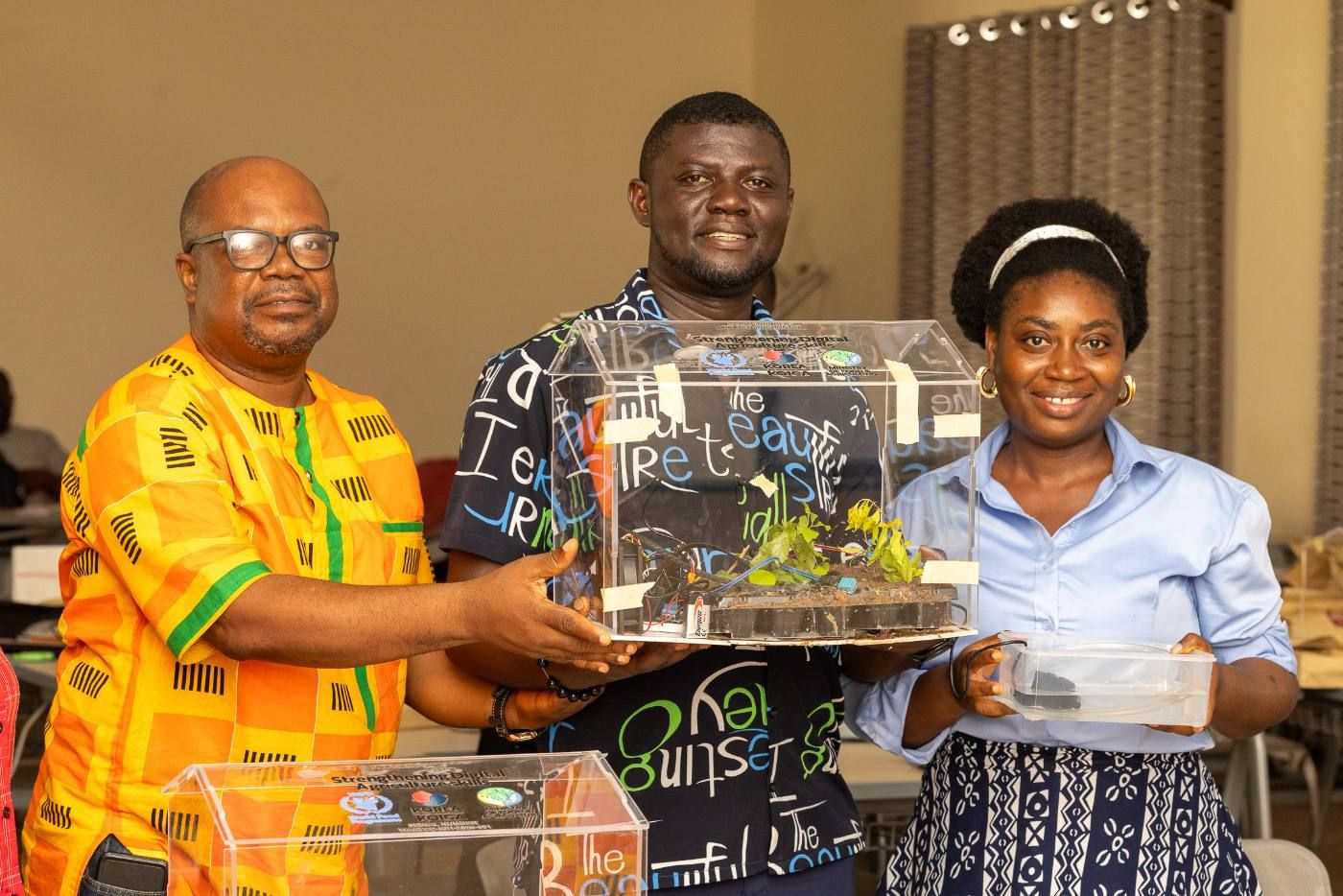 KAC staff show off a completed greenhouse model at the close of the training.
Graduates who can read a soil sensor, interpret weather data and market produce online will be ready for an agricultural sector that increasingly expects those skills, whether as extension officers, agripreneurs or farmers.
The cutlass and hoe are not going anywhere. At Kwadaso, they will soon have company.
Kwadaso Agricultural College, Kumasi, is a public agricultural training institution under the Ministry of Food and Agriculture. The Digital Agriculture pilot is implemented with WFP, KOICA, MoFA, CTVET and GI-KACE.